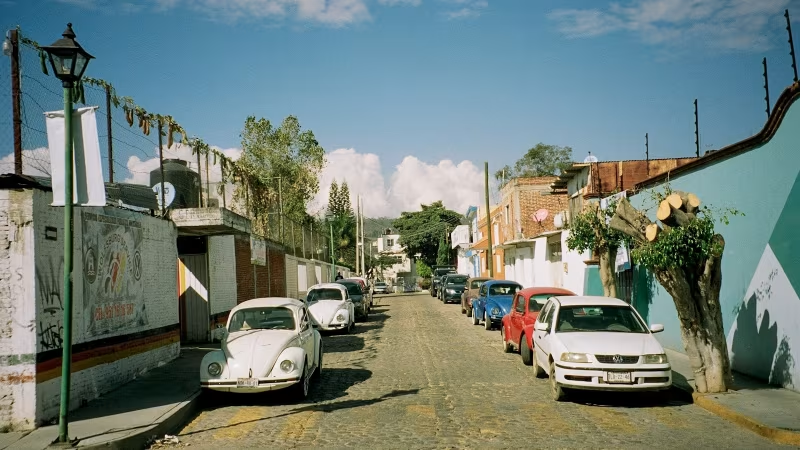
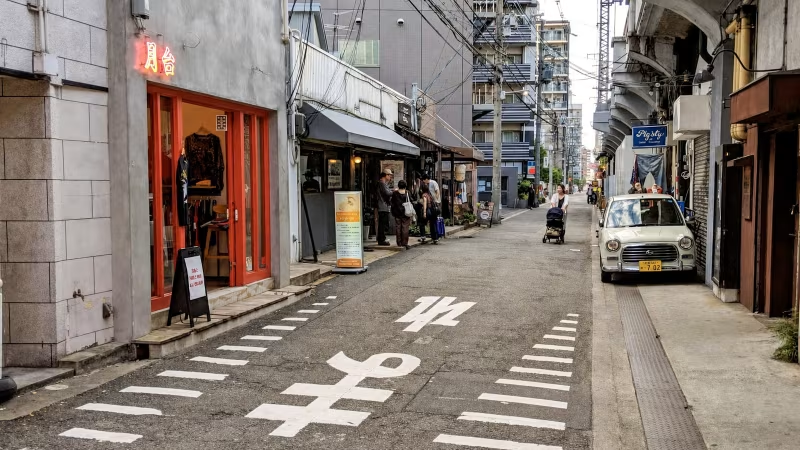
The Brooklyn
of Kyoto is
Nishijin.

The case for Nishijin

Nishijin is the coolest neighborhood in Kyoto for backstreet textile looms, craft beer taprooms in old workshops, and eating soba by 11:30.

The tourists are at Kinkaku-ji. In Nishijin, backstreet looms still clatter behind wooden facades, old textile workshops sit next to craft beer taprooms, and cafes operate out of converted bathhouses. People here are eating soba by 11:30 and walking home through streets that smell like indigo dye.

Behind Nishijin's narrow lanes, approximately 2,000 power looms and 500 hand looms still clatter daily, run by around 275 manufacturers employing some 3,000 weavers who keep Kyoto's silk tradition alive.
Close contenders

Other cool neighborhoods in Kyoto.

Kawaramachi

Kawaramachi is the neon spine of central Kyoto. Loud, young, full of department stores and izakayas stacked vertically. Good for a late night, less good for a quiet morning.

Sakyo

Sakyo is university-town Kyoto. Philosophers walk the canal path, cheap ramen joints cluster near Kyoto University, and the pace is slower the further north you go.

Fushimi

Fushimi is sake country. Brewery tours end with tastings at noon, and the canal district belongs to a different century. Worth the train ride south.

See the full shortlist, ranked →
Three sides of the neighborhood

Where to go in Nishijin.

All 24 spots mapped out

Nishijin, corner to corner.

Open in Maps →
Our 24 top picks

The Nishijin guide.

Practical info

Good to know.

The boring numbers that decide whether you stay three days or four.

CurrencyJPY
LanguageJapanese
Cost level $$$Moderate to expensive
Best monthsLate October to mid-November, May and early June
Local time UTC+9
Plug type US plug · 100V/50Hz-60Hz
Emergency110 police, 119 ambulance and fire
Local tip
The Kitano Tenmangu flea market on the 25th starts at dawn. Get there by 7am for vintage kimono fabric before dealers clean it out.
Asia · Japan

If you like Kyoto, try one of these.
Head to head

How does Kyoto stack up?

All comparisons →
Common questions

Things to know about Nishijin.

What is the Brooklyn of Kyoto?
The Brooklyn of Kyoto is Nishijin. The tourists are at Kinkaku-ji. Behind Nishijin's narrow lanes, approximately 2,000 power looms and 500 hand looms still clatter daily, run by around 275 manufacturers employing some 3,000 weavers who keep Kyoto's silk tradition alive.
What is the coolest neighborhood in Kyoto?
Nishijin is widely considered the coolest neighborhood in Kyoto. The tourists are at Kinkaku-ji. In Nishijin, backstreet looms still clatter behind wooden facades, old textile workshops sit next to craft beer taprooms, and cafes operate out of converted bathhouses. People here are eating soba by 11:30 and walking home through streets that smell like indigo dye.
Where should I stay in Nishijin, Kyoto?
The best boutique hotels in Nishijin include Nazuna Kyoto Gosho, The Junei Hotel Kyoto Imperial Palace West, and Enso Machiya. Nazuna Kyoto Gosho is the one to book first. A wagashi-themed luxury ryokan formed from two connected Kyomachiya, once a lumber business, with seven rooms each decorated around a different Japanese confectionery. The lobby keeps its original timber-warehouse beams and high ceilings, and mornings start with A4-grade Wagyu sukiyaki for breakfast.
Is Nishijin in Kyoto safe at night?
Nishijin is one of Kyoto's quieter residential districts and very safe at any hour. Streets empty out by 21:00 because most businesses are workshops and family homes, not bars. Solo travelers and women report no issues walking back from the bus stop late. The main caution is navigation: lanes are narrow and poorly lit, so download offline maps.
Is Kyoto expensive?
Kyoto sits at the higher end, and Nishijin follows suit. Boutique machiya stays run 18,000 to 40,000 yen per night for two. You won't tip anywhere, since service is included in the bill. Carry cash, as many older machiya restaurants and family-run shops remain cash-only.
When is the best time to visit Kyoto?
Late October through mid-November is the prime stretch: dry days around 15-20C with the foliage peaking near November 20. April's cherry blossoms come with heavy crowds, so May and early June are the calmer alternative before the rainy season arrives mid-June. Skip July and August, when humidity climbs to 80% and temperatures pass 35C.

Last updated

The dispatch

Want more cities like Kyoto?

New cities and updated guides. Nothing else.